
News archive
Category: Homepage
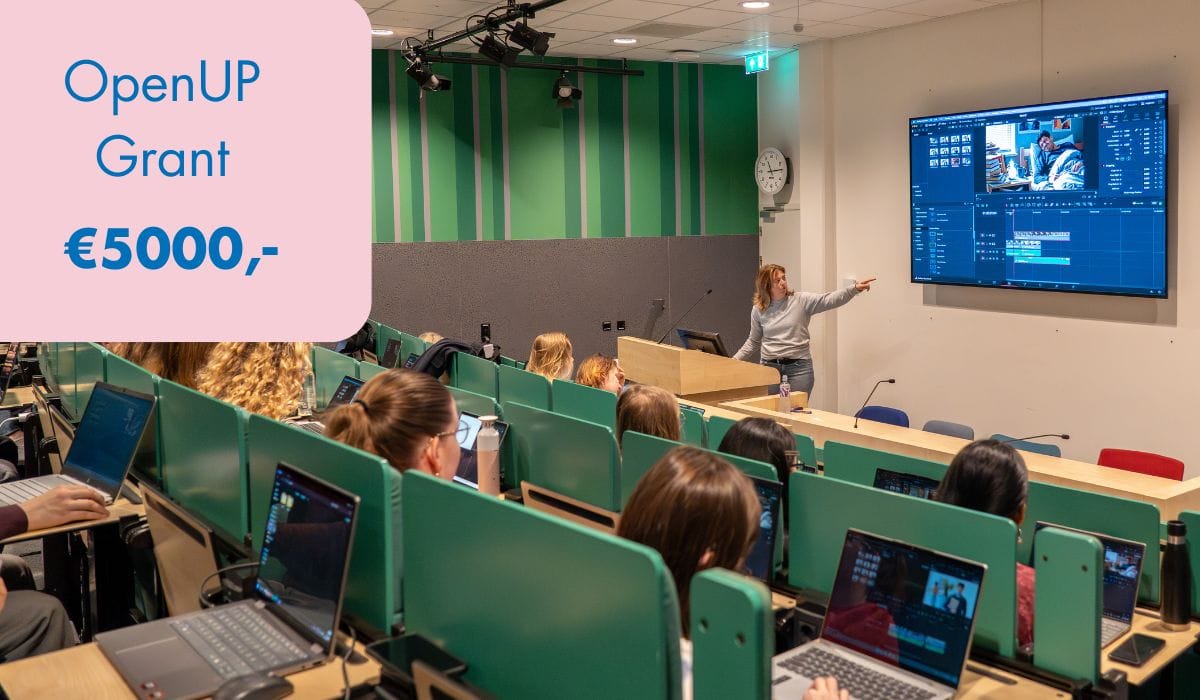
OpenUP Grant: deadline extended until 21 June 2026
Due to the many expressions of interest we have received, and in response to several requests for additional time, we have decided to extend the application deadline for the OpenUP Grant.
…
Investing in open research information: OpenAlex partnership and end of Scopus license
Maastricht University Library is taking a significant step towards open research information by investing in a partner subscription with OpenAlex. At the same time, the library has decided to cancel its Scopus license with effect from 1 January 2027.
…-
OpenUP Grant: Unlock €5.000 to transform your learning materials into FAIR resources!
Are you an educator looking to enhance your courses with innovative learning materials? The OpenUP Grant offers you the opportunity to license and share the learning materials you have created as Open Educational Resources (OER).
… 
Maastricht University signs the Barcelona Declaration on Open Research Information
Maastricht University (UM) is set to take a significant step in its commitment to Open Science by formally signing the Barcelona Declaration on Open Research Information. Rector Magnificus Jan Smits will sign the Declaration at a dedicated event on 12 June, reaffirming UM’s ambition to move towards open, transparent infrastructures for research information.
…
What if exam prep felt more like a conversation than a countdown?
Aki Härmä and Julie Bauer explore a more open, interactive way for students to learn. Most exam preparation follows a familiar pattern: read notes, try a few questions, realise you know less than you thought, panic a little, then carry on. But what if revision could talk back?
…
Registration now open: Open Science Festival Limburg 2026
The Open Science Community Maastricht and the Open Science Community Parkstad warmly invite researchers, educators, students, and anyone curious about Open Science to sign up for the Open Science Festival Limburg 2026. The festival takes place on 11 and 12 June 2026 and will bring our community together across two locations with activities in Heerlen (11 June) and Maastricht (12 June).
…
Strategic Collection Plan 2026-2031 now available
Building on the strategic theme Scientific Information @ the Core, the new Strategic Collection Plan outlines our ambitions for sustainable, accessible, and future-focused collections.
…
Open Science Festival Limburg: save the dates
The Open Science Community Maastricht and the Open Science Community Parkstad will jointly organise the Open Science Festival Limburg on 11–12 June 2026. The festival will take place in Heerlen on 11 June and in Maastricht on 12 June, with this year’s theme on Interdisciplinarity.
…
Recognising and Rewarding Open Science: looking beyond traditional metrics
What does it mean to truly recognise and reward academic work in today’s research landscape? And how can Open Science be part of that conversation?
…
Collaboration in SURF Research Drive
At Maastricht University (UM), SURF Research Drive (SRD) provides a secure environment for storing and sharing research data. It supports collaboration both within UM and with external partners, using existing authentication methods to make teamwork safe and efficient.
…


